


Perioral Dermatitis
From £14.99
Perioral dermatitis is a common facial rash of small red bumps and pustules, usually clustered around the mouth and sometimes around the nose or eyes. It often follows the use of a steroid cream on the face, and a narrow band of normal skin bordering the lips is a classic sign.
Treatment works, but it takes patience. We offer a range of clinician-approved topical and oral options, alongside clear advice on stopping the trigger and simplifying your skincare while your skin settles.

pharmacists

consultations & orders

delivery before 3:30PM

Prescription
Perioral dermatitis is a long-term but treatable rash that appears around the mouth, and sometimes in the folds beside the nose or around the eyes. It is made up of clusters of small red bumps and pustules on mildly red, slightly scaly skin.
It tends to burn or sting rather than itch, and the skin can feel tight and dry. One feature sets it apart from most other facial rashes: a narrow rim of completely normal skin immediately next to the lips, which the rash spares.
It is most common in women aged 20 to 45, though men and children can get it too. It is not contagious, it is not caused by poor hygiene, and it is not acne, even though it is often mistaken for it.
With the right treatment most people are clear within six to eight weeks. The important thing is knowing what is driving it, because in most cases the rash will not settle until that trigger is removed.
At 123Meds, you can request treatment for perioral dermatitis by completing a short online consultation. You don’t need a prior prescription—once your assessment is reviewed and approved by our prescriber, a free prescription will be issued and sent to our pharmacy team for dispensing.
The most common trigger by far is a steroid cream used on the face. This includes creams prescribed for another condition and mild hydrocortisone bought over the counter. The steroid makes the skin look better for a few days, then worse, and the rash keeps returning for as long as it is used.
Inhaled and nasal steroids for asthma, hay fever or rhinitis can do the same thing, particularly where the spray settles around the mouth and nose. Heavy or occlusive moisturisers, thick foundations, fluoridated toothpaste and some cosmetics are also associated with it.
Hormonal factors may play a part, which is one reason it is more common in women of childbearing age. In a good number of people no single cause is ever identified.
Perioral dermatitis is not an infection and you cannot pass it on. Identifying and removing your own trigger is the single most useful thing you can do, and for most people that means stopping any steroid on the face.
- Clusters of small red bumps and pustules around the mouth, and sometimes beside the nose or around the eyes
- A mildly red, slightly scaly background to the rash
- A narrow rim of normal skin immediately bordering the lips, which the rash spares
- Burning, stinging or a tight feeling rather than itching
- Dryness and flaking, which can be worse if you have been using a steroid cream
- Flares that settle briefly with a steroid and then return worse than before
- No blackheads or whiteheads, which is what separates it from acne
Symptoms vary from person to person. If your eyes are gritty, sore or watery, if the rash is weeping or crusting, or if you feel unwell with it, see your GP or a dermatologist in person rather than treating it online.
Perioral dermatitis responds well to treatment, but it needs a clear plan and some patience. Treatment depends on how widespread the rash is and what triggered it, and usually combines stopping the cause with a prescribed medicine.
Stopping the trigger
If you have been using a steroid cream on your face, stopping it is the most important step. Expect the rash to flare for two to four weeks afterwards before it starts to settle. This is normal withdrawal, not treatment failure, and the medicines below are partly there to shorten it.
Topical Treatments
Applied directly to the skin, and usually the first choice for mild to moderate cases.
- Metronidazole 0.75% gel or cream (Rozex) – a topical antibiotic that calms inflammation
- Azelaic acid 15% gel (Finacea) – a non-antibiotic option with no resistance risk and no 12-week cap
- Erythromycin with zinc (Zineryt) – an alternative topical antibiotic solution
- Pimecrolimus 1% cream (Elidel) – an anti-inflammatory that is neither a steroid nor an antibiotic
Oral Medications
Added for moderate, widespread or stubborn rashes, or where a topical alone has not been enough. Antibiotic courses normally run from 4 to 12 weeks.
- Doxycycline 100mg – taken once a day, the most widely used option
- Lymecycline 408mg – taken once a day, generally less likely to cause sun sensitivity
- Erythromycin 250mg – taken as two tablets twice a day
Skincare and lifestyle
Keep your routine simple while the rash settles. Use a plain, fragrance-free moisturiser and a daily SPF, and avoid scrubs, astringents, heavy occlusive products and thick make-up. Once it has cleared, avoiding steroid creams on the face is the best way to stop it coming back.
A note on licensing
No medicine currently holds a UK licence specifically for perioral dermatitis, so every treatment on this page is prescribed off-label. That means the prescriber is using it outside the terms of its licence because the clinical evidence supports doing so. You will be asked to confirm you understand this during your consultation.
What is perioral dermatitis?
Perioral dermatitis is a common facial rash made up of small red bumps, pustules and mild scaling, usually appearing around the mouth, and sometimes around the nose or eyes. A clear rim of normal skin immediately next to the lips is a classic sign. It mainly affects women aged 20 to 45, though anyone can get it.
What causes perioral dermatitis?
The most common trigger by far is a steroid cream used on the face, whether prescribed or bought over the counter. Inhaled steroids for asthma, heavy or occlusive moisturisers, fluoridated toothpaste and some cosmetics are also associated with it. In many people no single cause is identified.
Is perioral dermatitis contagious?
No. You cannot catch it from someone else or pass it on.
What are the symptoms of perioral dermatitis?
Clusters of small red bumps and pustules on a mildly red, scaly background, typically around the mouth and in the folds beside the nose. It usually burns or stings rather than itching, and the skin can feel tight and dry. The narrow band of skin bordering the lips is characteristically spared.
Is perioral dermatitis the same as acne or rosacea?
No, although it is often mistaken for both. Unlike acne there are no blackheads or whiteheads. Unlike rosacea there is usually no flushing or visible thread veins. It is a distinct condition and is treated differently, which is why a diagnosis from a healthcare professional matters before starting treatment.
Why do I have to stop my steroid cream?
Because in most cases the steroid is what is driving the rash. Continuing it makes the skin look better for a few days and then worse, and the condition will not clear while you keep using it. Stopping is the single most important step in treatment.
Will my skin get worse before it gets better?
If you have been using a steroid cream on your face, yes. Expect a flare for two to four weeks after stopping before the rash starts to settle. This is a normal part of steroid withdrawal, not a sign that the treatment has failed. The medicines prescribed alongside are partly there to shorten that flare.
How is perioral dermatitis treated?
Treatment usually starts with stopping any facial steroid and simplifying your skincare. Topical options include metronidazole (Rozex), azelaic acid (Finacea), erythromycin with zinc (Zineryt) and pimecrolimus (Elidel). For moderate or stubborn cases an oral antibiotic such as doxycycline, lymecycline or erythromycin may be added. No medicine is licensed specifically for this condition, so all of them are prescribed off-label.
How long does treatment take?
It varies from person to person. Most people see a clear improvement within six to eight weeks, and the rash can take up to about twelve weeks to settle fully – longer if it followed a steroid cream. The treatment course is usually shorter than that: antibiotic courses normally run 4 to 6 weeks, are reviewed at twelve weeks, and are not continued beyond that without an in-person review. Azelaic acid and pimecrolimus are not antibiotics and are not capped.
Do I need a prescription?
Yes. Every treatment for perioral dermatitis is prescription-only. You can complete an online consultation here and a UK prescriber will review whether treatment is suitable for you.
Can perioral dermatitis come back?
It can, particularly if a steroid cream is used on the face again. Keeping your routine simple, avoiding facial steroids and heavy occlusive products, and using a plain fragrance-free moisturiser with a daily SPF all reduce the chance of it returning.
When should I see someone in person instead?
If the rash involves your eyes, is weeping, crusting or spreading quickly, or you feel unwell with it, see your GP or a dermatologist rather than using this service. The same applies if you are not sure of the diagnosis, or if you have already completed a full course of treatment without improvement.
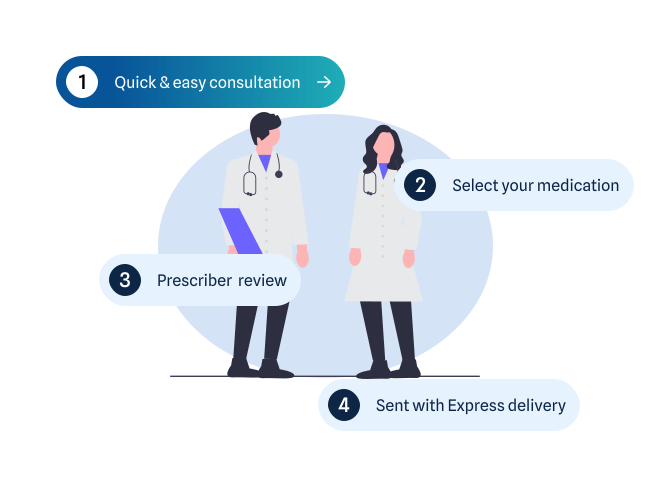
Fill out a quick form!
Fast, safe online consultations – no need to visit a GP or pharmacy.

Select your medication
Once you’ve completed the assessment, we’ll show you treatments that are right for you.

Prescriber review
Our prescribers will review your consultation and, if it's right for you, send a prescription to our pharmacy.

Express Delivery
Discreet delivery straight to your door, as soon as the next day.

Our 5-Point Safety Guarantee
We focus on trust, privacy, and expert service in online medication ordering.

GPHC and MHRA Regulated Pharmacy
Regulated by all necessary UK regulatory bodies

UK qualified Pharmacists
All consultations reviewed by UK pharmacists

Authentic Medication
Sourced from approved suppliers only

Customer Care
Customer care team available via email or phone

Trusted by Thousands
Thousands of satisfied customers
pharmacists
consultations & orders
delivery before 3:30PM
Prescription

